
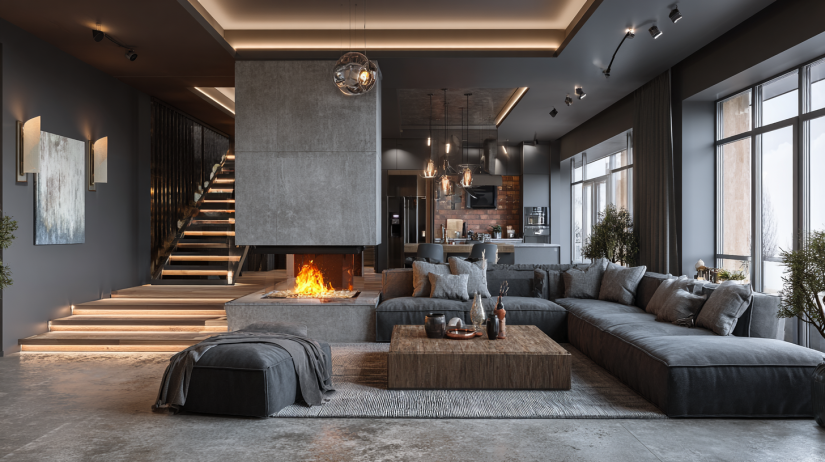
In today’s fast-paced world, the design of our living spaces plays a crucial role in how we function daily. Smart interior space design not only enhances the aesthetic appeal of a home but also significantly impacts the functionality and efficiency of our daily routines. As modern living continues to evolve, the need for intelligently designed spaces that cater to both form and function becomes increasingly important.
This article will guide you through the principles of designing smart interior spaces for modern living. From understanding the importance of space utilisation to integrating technology seamlessly into your home, you’ll learn key strategies that can transform your living environment into a haven of comfort and efficiency.
Complete guide to designing smart interior spaces
Designing smart interior spaces requires a blend of creativity, practicality, and technological integration. As we delve into this guide, you’ll discover how to balance these elements effectively in your home.
Optimising space for functionality
Understanding spatial dynamics
Spatial dynamics refer to how different areas in a home interact with each other. By understanding how people move within a space, you can design layouts that facilitate ease of use and comfort. For instance, an open floor plan can make a small space feel larger and more connected. This concept is particularly effective in urban apartments where space is at a premium.
It’s essential to consider the function of each room and how it serves the occupants. A living room, for example, should accommodate seating for family gatherings and entertainment, while a bedroom should foster relaxation and privacy.
Flexible furniture solutions
Incorporating furniture that serves multiple purposes can significantly enhance the functionality of a space. Think of a sofa that converts into a bed, or a dining table that can be folded away when not in use. These solutions are ideal for smaller homes where every square foot counts.
Incorporating technology seamlessly
Smart home systems
Smart home technology has revolutionized the way we interact with our living spaces. Systems like automated lighting, climate control, and security can be controlled remotely, providing both convenience and energy efficiency. By integrating these technologies into your home’s design, you create a space that adapts to your lifestyle with minimal effort.
Additionally, consider investing in smart appliances that not only save energy but also offer advanced features that enhance everyday tasks, such as refrigerators with inventory tracking or ovens with automated cooking settings.
Enhancing aesthetics with modern design
The aesthetic appeal of a space is just as important as its functionality. Modern design principles often focus on simplicity, clean lines, and a neutral color palette. These elements create a serene environment that is both inviting and stylish.
Practical steps to smart interior design
- Assess your needs: Determine which areas of your home require the most improvement and how you use each space.
- Plan your layout: Use design tools or apps to visualize changes before implementing them.
- Choose multifunctional furniture: Select pieces that serve more than one purpose to maximize space.
- Integrate smart technology: Identify which smart systems will offer the most benefits for your lifestyle.
- Stick to a cohesive design theme: Ensure that all design elements complement each other for a unified look.
Key data & statistics in smart interior design
| Indicator | Value / Result | Interpretation |
|---|---|---|
| Space Utilization | 85% efficiency | Homes with open floor plans utilize space more effectively. |
| Smart Home Adoption | 54% increase | More households are adopting smart technology for convenience. |
| Return on Investment | 10-15% increase in home value | Smart home features can increase property value. |
| Energy Savings | 30% reduction | Smart systems significantly reduce energy consumption. |
Practical tips for successful smart interior design
Implementing smart interior design requires a strategic approach to ensure that your home is both functional and aesthetically pleasing. These practical tips will help you navigate the process efficiently.
Before diving into the tips, consider the unique challenges your space presents. Whether dealing with limited square footage or an outdated layout, identifying these obstacles early on will allow you to address them effectively.
Tips for success in smart interior design
- Prioritize essential upgrades: Focus on changes that will have the most significant impact on your daily life.
- Keep it simple: Avoid overcomplicating your design; simplicity often yields the best results.
- Incorporate personal touches: Add elements that reflect your personality and style.
- Stay informed: Keep up with the latest trends and technologies in interior design.
- Test before committing: Experiment with design ideas on a small scale before full implementation.
Pros and cons of smart interior design
| Pros | Cons |
|---|---|
| Enhances functionality | Can be costly to implement |
| Increases property value | Technology can become outdated quickly |
| Improves energy efficiency | Requires regular maintenance |
| Customizable to personal taste | Over-customization can limit resale appeal |
Explore similar articles
Modern residential architecture trends for sustainability
How to design functional and aesthetic homes
❓ Frequently asked questions about smart interior design
What is smart interior design?
Smart interior design involves creating functional, aesthetically pleasing spaces that incorporate modern technology to enhance convenience and efficiency. It focuses on maximizing the use of space and integrating smart home systems.
How does smart interior design benefit homeowners?
Smart interior design can increase a home’s functionality, improve energy efficiency, and enhance property value. It also offers convenience through the integration of technology, making daily routines more efficient.
What are some common smart home technologies used?
Common smart home technologies include automated lighting systems, smart thermostats, security systems, and appliances that can be controlled remotely via smartphone apps. These technologies offer convenience and energy savings.
Can smart interior design be applied to small spaces?
Yes, smart interior design is particularly effective in small spaces. By using multifunctional furniture and optimizing layout, even limited areas can be transformed into efficient, stylish environments.
What should be considered when choosing smart furniture?
When selecting smart furniture, consider the piece’s functionality, durability, and how well it integrates with existing decor. Look for items that offer multiple uses, such as convertible beds and extendable tables.