Designing environmentally friendly buildings is crucial in today’s world, where sustainable architecture plays a pivotal role in minimizing environmental impact. With urbanization on the rise, the construction industry faces the challenge of reducing carbon footprints while creating efficient, healthy spaces for occupants. This shift towards eco-friendly design is not just a trend but a necessity for future generations.
This article will guide you through the principles of designing environmentally friendly buildings, from selecting sustainable materials to implementing energy-efficient technologies. By understanding these concepts, architects and builders can contribute significantly to global sustainability efforts, reducing waste and conserving resources.
Comprehensive guide to environmentally friendly building design
To design environmentally friendly buildings, it’s essential to integrate sustainable practices from the outset. These practices not only reduce the environmental impact but also enhance the building’s efficiency and occupants’ well-being.
Choosing sustainable materials
Recycled and renewable materials
Using recycled and renewable materials is a cornerstone of sustainable building design. Materials such as reclaimed wood, recycled steel, and bamboo not only reduce the depletion of natural resources but also lower the energy consumption associated with manufacturing new materials. For instance, according to Architecture 2030, using recycled steel can save up to 75% of the energy required to produce new steel.
Implementing these materials reduces waste and promotes a circular economy, where materials are reused and repurposed, extending their lifecycle and minimizing environmental impact.
Locally sourced materials
Opting for locally sourced materials can significantly reduce transportation emissions and support local economies. Local materials are often more compatible with the regional climate and cultural context, enhancing the building’s integration with its environment. This practice not only cuts down on carbon emissions but also fosters community resilience and economic growth.
Integrating energy-efficient systems
Solar energy utilization
Incorporating solar panels and solar water heating systems can drastically reduce a building’s reliance on fossil fuels. Solar energy systems provide a renewable source of power that decreases electricity costs and carbon emissions. According to SEIA, buildings with solar installations can cut their electricity bills by 20% to 40%, making them economically and environmentally beneficial.
Furthermore, solar energy systems can be integrated seamlessly into a building’s design, maintaining aesthetics while improving sustainability.
Advanced insulation techniques
Proper insulation is vital for maintaining temperature regulation within a building, reducing the need for heating and cooling systems. Advanced insulation materials, such as spray foam and rigid panels, provide superior thermal resistance, improving energy efficiency. These materials can reduce energy consumption by up to 50%, according to U.S. Department of Energy.
Water conservation strategies
Implementing water-saving technologies is essential for eco-friendly building design. Low-flow fixtures, rainwater harvesting systems, and greywater recycling can significantly reduce water usage. These practices not only conserve water but also reduce the building’s overall operational costs.
Practical steps for sustainable design
- Conduct a site analysis: Evaluate the environmental characteristics of the site to maximize natural resources and minimize disruptions.
- Incorporate passive design: Utilize natural light, ventilation, and thermal mass to reduce energy consumption.
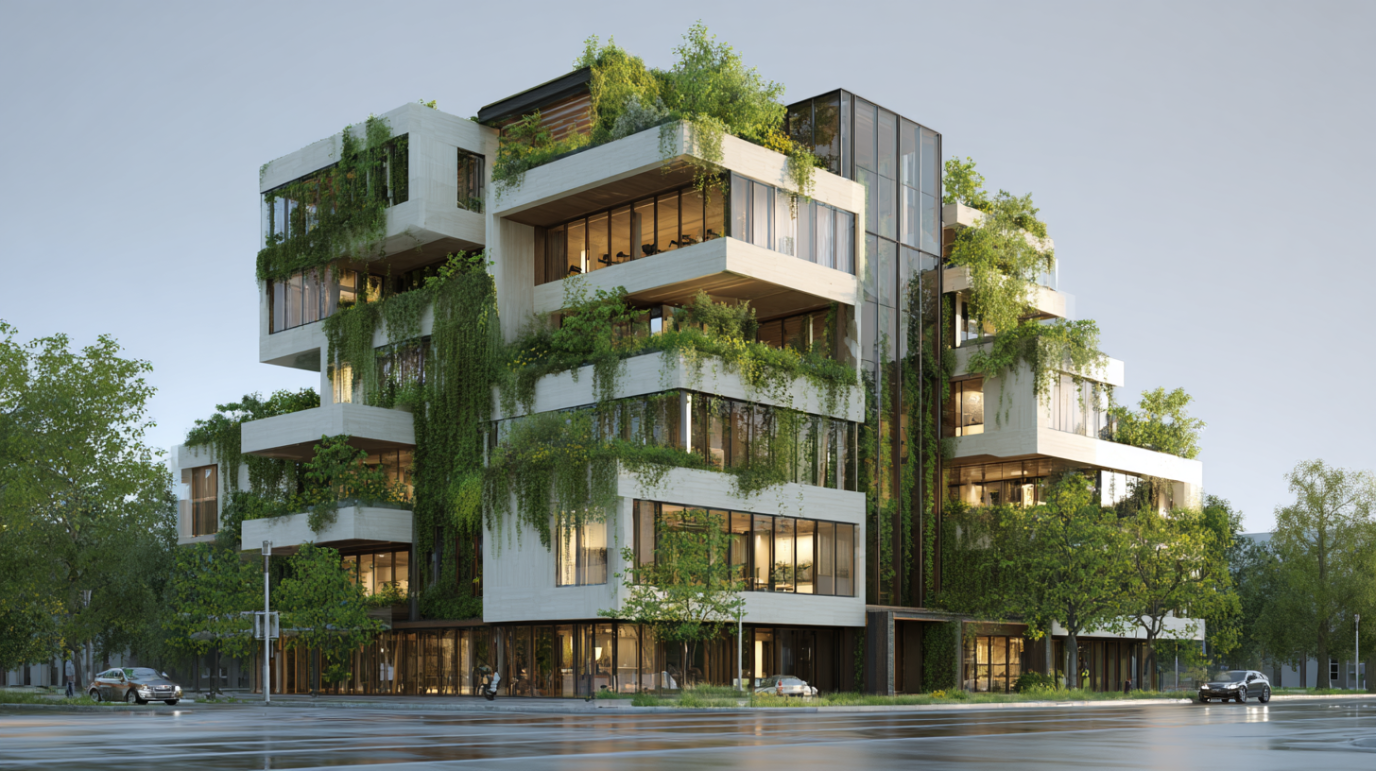
- Implement green roofs: Green roofs provide insulation, reduce rainwater runoff, and improve air quality.
- Choose energy-efficient appliances: Opt for ENERGY STAR-rated appliances to decrease energy usage and costs.
- Utilize smart technology: Integrate smart systems for lighting, heating, and cooling to optimize energy efficiency.
Key data & statistics
| Indicator | Value / Result | Interpretation |
|---|---|---|
| Energy savings with solar panels | 20%-40% | Significant reduction in electricity costs and carbon footprint. |
| Recycled material energy savings | Up to 75% | Substantial decrease in manufacturing energy requirements. |
| Water use reduction with low-flow fixtures | 30%-50% | Lower water bills and conservation of water resources. |
| Insulation energy savings | Up to 50% | Enhanced thermal efficiency, reducing heating and cooling demands. |
Practical tips for eco-friendly building design
Implementing practical tips in eco-friendly building design is essential for achieving sustainability goals. These tips provide actionable insights that can be applied to various projects, ensuring efficiency and environmental responsibility.
Understanding common challenges and avoiding pitfalls is crucial for successful implementation. For instance, failing to consider the local climate during the design phase can lead to increased energy usage and operational costs.
Tips for success in eco-friendly building design
- Prioritize energy efficiency: Focus on reducing energy consumption in all design aspects.
- Embrace passive solar design: Use the building’s orientation and layout to enhance natural lighting and heating.
- Choose sustainable materials: Opt for materials with low environmental impacts and high durability.
- Incorporate green spaces: Design outdoor areas that support biodiversity and improve air quality.
- Engage stakeholders early: Involve community members and experts from the project’s inception to ensure alignment with sustainability goals.
Pros and cons of environmentally friendly building design
| Pros | Cons |
|---|---|
| Reduced environmental impact | Higher initial costs |
| Long-term cost savings | Complexity in design and planning |
| Improved occupant health | Potential for longer construction timelines |
| Increased property value | Need for specialized knowledge and skills |
Explore similar articles
Modern residential architecture trends for sustainability
❓ Frequently asked questions
What is an environmentally friendly building?
An environmentally friendly building is designed to minimize environmental impact by using sustainable materials, energy-efficient systems, and water-saving technologies. It aims to reduce carbon emissions and resource consumption while promoting occupant health and well-being.
How do sustainable buildings benefit occupants?
Sustainable buildings improve indoor air quality, natural lighting, and thermal comfort, which enhances occupant health and productivity. They also reduce utility costs and create healthier living and working environments.
Are eco-friendly buildings more expensive to build?
While eco-friendly buildings may have higher initial costs due to sustainable materials and advanced technologies, they offer long-term savings through reduced energy and water bills and increased property value.
What role do architects play in sustainable design?
Architects are crucial in sustainable design, as they integrate eco-friendly principles into the building’s design, ensuring energy efficiency, resource conservation, and occupant well-being from the project’s inception.
How can technology enhance sustainable building design?
Technology enhances sustainable building design by providing tools for energy monitoring, smart lighting, and automated systems that optimize resource use. It also facilitates data analysis to improve building performance.
What is passive design in architecture?
Passive design involves using the building’s orientation, thermal mass, and natural ventilation to maintain comfortable indoor temperatures, reducing reliance on mechanical heating and cooling systems.